


Strength training
Strength training is the targeted exertion of the musculature with the aim of increasing its performance – whether in the form of maximum strength, endurance strength or muscle building. While endurance sports and cardio primarily train the cardiovascular system, strength training is about the muscle's ability to overcome or maintain resistance. This resistance can look different: one's own body weight (body weight), for example, in pull-ups or planks, or external weights.
The sequence of a typical strength session can be divided into repetitions and sets. Several repetitions of an exercise – about ten clean bicep curls – form a set. Multiple sets with short breaks in between provide a targeted training stimulus. The choice of load (training weight) and intensity (degree of effort relative to maximum possible performance) determines which adaptation effect is achieved: Few, heavy repetitions primarily train maximum strength, many repetitions with moderate weight promote endurance strength. For muscle building, the optimal range is often at a medium number of repetitions and a load that leads near to muscle failure – the 3x10 rule is a proven basic principle here.
Compound exercises vs. isolation exercises
Strength exercises can be divided into compound exercises and isolation exercises. Compound exercises like squats, deadlifts, bench press, shoulder press or rowing – often referred to as the Big 5 – engage multiple muscle groups simultaneously and also challenge the core muscles. They are particularly effective because they activate a large muscle mass simultaneously and also improve coordination skills. Isolation exercises, on the other hand, focus on a single muscle or a small muscle group, such as triceps pushdowns or leg extensions, and are ideal for specifically strengthening weaknesses or burning out a muscle group after a compound exercise block.
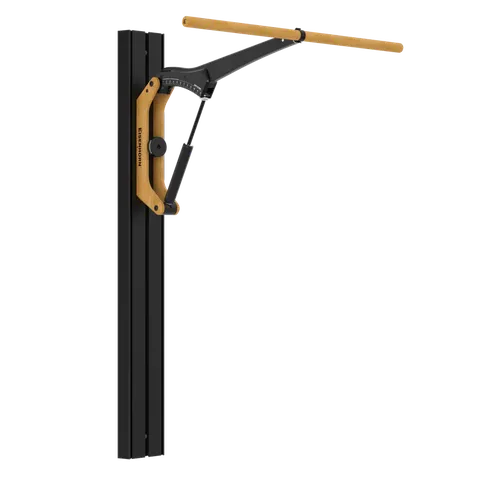
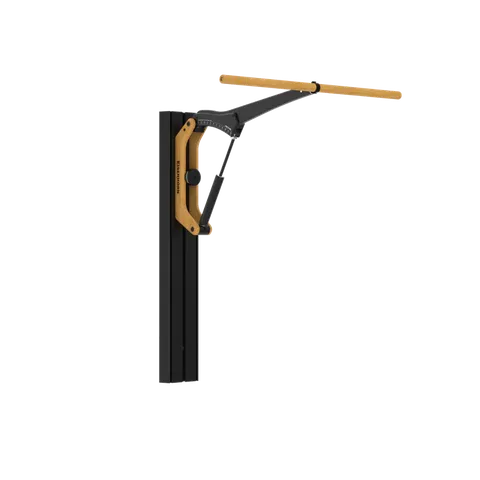
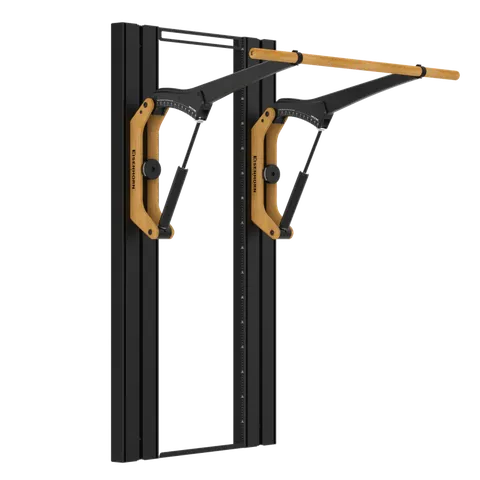
A crucial factor in strength training is progression. For muscles to grow and get stronger, the training stimulus must be increased over time – either through more weight, more repetitions, shorter breaks, or higher movement quality. At an EISENHORN strength station, this progression can be particularly finely controlled, as the weight is infinitely adjustable and many exercises can be performed in both controlled and explosive forms.
MIKE5
An example of structured and effective strength training is the combination of an EISENHORN strength station S or DS and the MIKE5 training concept. The program is based on the aforementioned five functional basic movements and is specially tailored to the strength station. Each training session lasts only five minutes but engages the major muscle groups – from the abdominal muscles to the back muscles and the leg muscles. Due to the infinitely adjustable weight on the strength station, both beginners with lower loads and advanced users with high intensity can train.
Strength training is not only a physical but also a mental discipline. Technically clean execution protects against injuries and ensures that the target muscles are optimally loaded. Excessive training frequency or too high intensity without sufficient recovery can lead to overtraining, which affects both performance and motivation. Therefore, recovery, adapted nutrition, and varied stress are just as much a part of training success as the actual exercise execution.


- Effective full body workout
- Infinite exercise variety
- Built for eternity
- Minimal space requirement
- Aesthetic design